


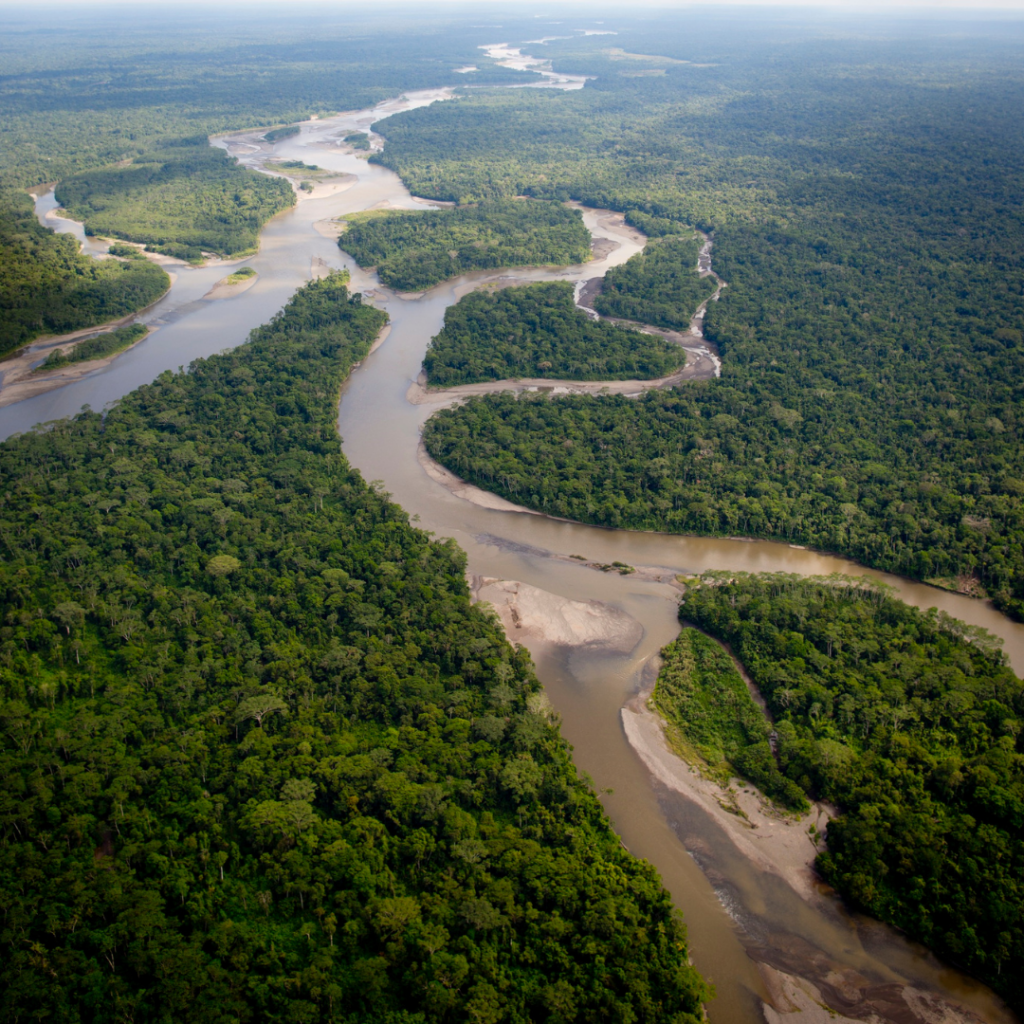
The 2015 cohort examined how large-scale hydropower development and land-use change are transforming hydrology, ecosystems, and human systems in the Amazon Basin. Research focused on the interactions among water, energy production, environmental conservation, and human well-being, addressing key challenges in one of the world’s most complex and rapidly changing watersheds.
As part of the Amazon Dams Network (ADN), an international collaboration of researchers and stakeholders, the cohort contributed to advancing knowledge on the social and ecological impacts of hydropower development. The program emphasized international research, interdisciplinary collaboration, and engagement with partners in the region to better understand and manage the consequences of infrastructure expansion.
Cohort Composition
- Environmental Engineering Sciences (ESSIE), College of Engineering
Faculty: Dr. David Kaplan
Graduate Student: Trey Crouch - Geography, College of Liberal Arts and Sciences
Faculty: Dr. Cynthia Simmons
Graduate Students: Roberta De Carvalho; Alexandra Sabo - Forest Resources and Conservation, College of Agricultural and Life Sciences
Faculty: Dr. Stephanie Bohlman; Dr. Denis Valle
Graduate Students: Jacy Hyde; Christine Swanson - School of Natural Resources and Environment, College of Agricultural and Life Sciences
Faculty: Dr. Kai Lorenzen
Graduate Student: May Lehmensiek
Funding: the cohort secured over $745,000 in external funding, including major support from the National Science Foundation.
Outputs and Contributions: 24 peer-reviewed publications, advancing understanding of hydrologic and socio-environmental change in the Amazon Basin. Their work contributed to international collaboration, interdisciplinary research, and engagement with stakeholders addressing the impacts of hydropower and infrastructure development.